
Sift's latest Digital Trust and Safety Index describes how artificial intelligence (AI) is fuelling a fraud surge that will challenge retailers and financial institutions.


You work. You get money. You take money and invest it. If you are lucky, it becomes larger. Otherwise, it becomes smaller. If you have a lot of money, you can either start a company or not. If you start a company, you invest in your own ability to influence outcomes and in your own transformation function. There are other, personal utility functions also being satisfied in executing the transformation function. Alternately, you focus on the work of getting capital into other companies. For this allocation and selection work, you are rewarded. To this, you can add the capital of others, until you are doing selection on their behalf.



In the long take this week, I try out a contrarian point of view on personal finance chatbots. Trim, a savings chatbot, just withdrew support from Facebook Messenger. While lots of other chatbots are still invested in conversational banking, what could we take away from the counterfactual of chatbots failing to get B2C traction? What is the impact on the rest of the platform wars waged by Amazon, Google, and Tesla for connected homes, cars, and the Internet of Things?
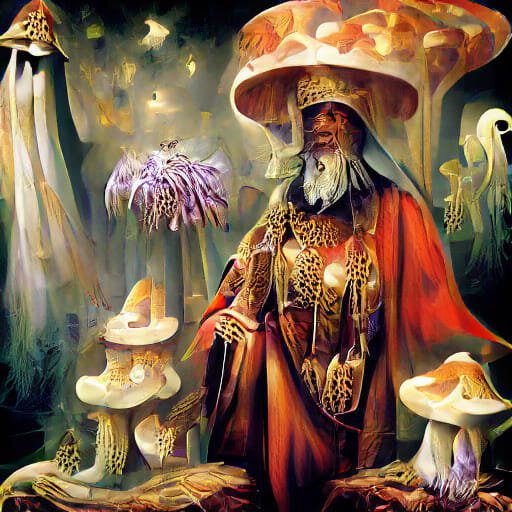
Instead, we are going to tap again into a new development in Art and Neural Networks as a metaphor of where AI progress sits today, and what is feasible in the years to come. For our 2019 “initiation” on this topic with foundational concepts, see here. Today, let’s talk about OpenAI’s CLIP model, connecting natural language inputs with image search navigation, and the generative neural art models like VQ-GAN.
Compared to GPT-3, which is really good at generating language, CLIP is really good at associating language with images through adjacent categories, rather than by training on an entire image data set.
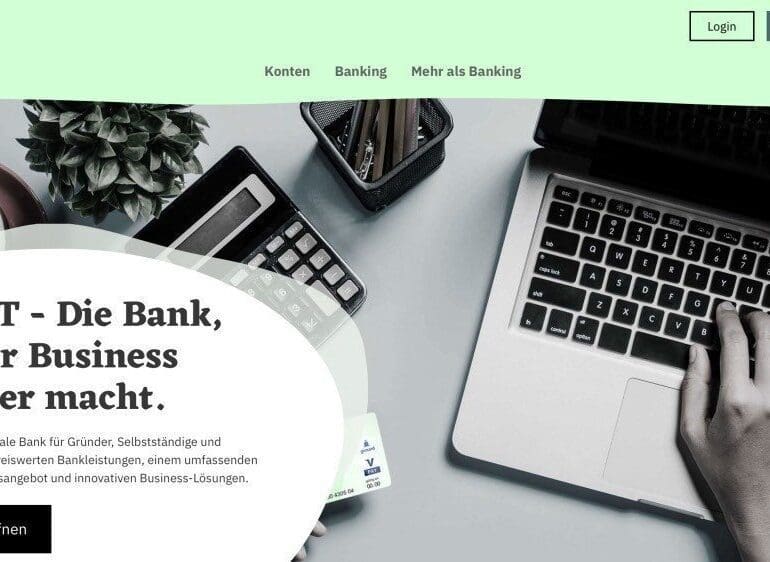
Today's corporations and governments are in the business of defining the balance of these aspects of our participation in society and the economy. Beliefs about the immutability of different attributes about what makes a person (or an employee) and how economies are built (cutting the pie, vs. growing the pie) determine the policy decisions you make, top down. As the core example this week, let's take Deutsche Bank. Facing pricing pressure and headwinds in several of its businesses, Deutsche is responding with a plan to fire 18,000 employees by 2022 and an announced investment of €13 Billion in technology and innovation by 2022. They even spun up a hipster-colored neobank as a proof point. Wall Street ain't buying it.
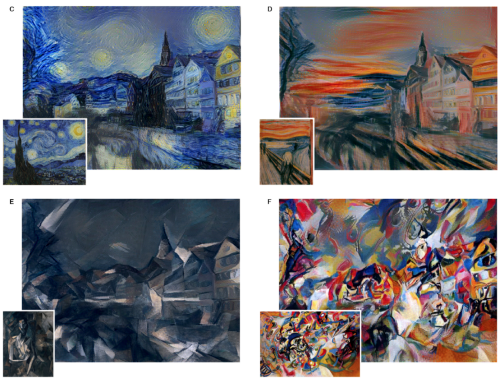
However, mastery is not immune to automation. As a profession, portraiture melted away with the invention of the Camera, which in turn became commoditized and eventually digitized. The value-add from painting had to shift to things the camera did *not* do. As a result, many artists shifted from chasing realism to capturing emotion (e.g., Impressionism), or to the fantastical (e.g., Surrealism), or to non-representative abstraction (e.g., Expressionism) of the 20th century. The use of the replacement technology, the camera, also became artistic -- take for example the emotional range of Fashion or Celebrity photography (e.g., Madonna as the Mona Lisa). The skill of manipulating the camera into making art, rather than mere illustration, became a rare craft as well -- see the great work of Annie Leibovitz.

What we know intuitively, and what the software shows, is that the pixelated image can be expanded into a cone of multiple probable outcomes. The same pixelated face can yield millions of various, uncanny permutations. These mathematical permutations of our human flesh exit in an area which is called “latent space”. The way to pick one out of the many is called “gradient descent”.
Imagine you are standing in an open field, and see many beautiful hills nearby. Or alternately, imagine you are standing on a hill, looking across the rolling valleys. You decide to pick one of these valleys, based on how popular or how close it is. This is gradient descent, and the valley is the generated face. Which way would you go?

The Securities and Exchange Comission punted again on allowing a passive Bitcoin ETF to enter the market. It failed to approve the VanEck SolidX Bitcoin Trust, instead opting to open a commentary period to address several questions around Bitcoin price formation and the health of the exchanges. A similar outcome faces the Bitwise Bitcoin ETF. You can tell I am not a fan of this waffling, and there are two core reasons: (1) the years-long delay and uncertainty is responsible for financial damage to both traditional and crypto investors, and (2) the premise of the objections misunderstand the environment of the Internet and the way our world is shaping up in the 21st century.