
We discuss the Facebook pivot into the metaverse and its rebrand into Meta. Our analysis touches on the competitive pressures faced by the company from big tech players, other ecosystem builders, and limits to growth for a $1 trillion business that likely motivated this refocus. We further dive into network effects around platforms, and why super apps and financial features are attractive, and how owning the hardware is a required defensive strategy. Lastly, we discuss these development through the crypto and Web3 lens, deeply disappointed with Facebook trying to domain park a generational opportunity with a centralized solution.
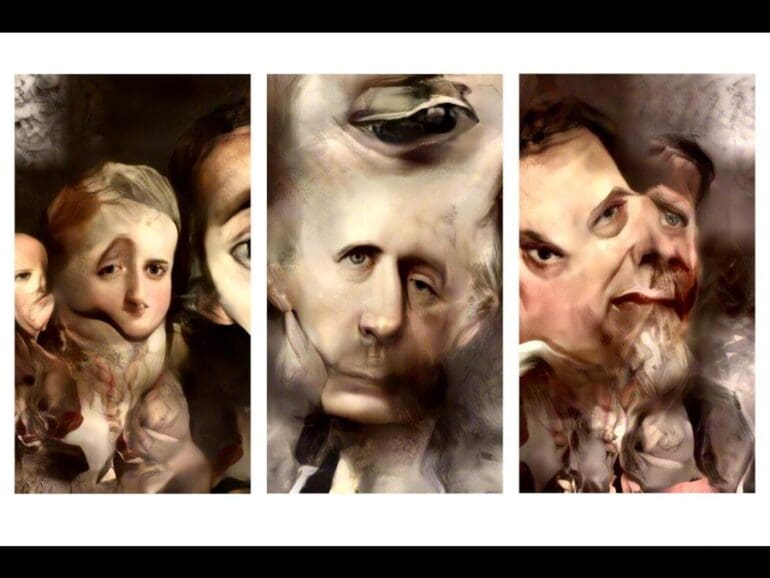
The image is taken from an AI paper which explains how to use generative adversarial networks (i.e., GANs) to hallucinate hyper realistic-imagery. By training on hundreds of thousands of samples, the model is able to create candidates representing things like “just a normal dude holding a normal fish nothing to see here”, and then edit out the ones that are too egregious.
The reason the stuff above is so scary is actually that you can mathematically transition in the space between images. So for example, you could move between “a normal dude” and “just a normal fish” and have nightmare fish people. Or you could create a DNA root for an image which is part dog, part car, and part jellyfish. Check out the video below and the very accessible https://www.artbreeder.com/ website to see what I mean.
We look at some of the recent Fintech bundling news that boggle the mind. Neobank Chime just raised a mammoth round from DST Global, valuing it at $6 billion. Figure raised another $60 million round. Goldman is launching a retail roboadvisor. Revolut is offering pensions. Wealthfront is offering mortgages. The world is upside down. We cool down with pictures showing augmented reality implementations in commerce and finance, and finish with an elevated thought about the future.
Finance is everywhere, and everywhere is finance. Smart city supply chains, self driving car insurance, video game real estate markets -- no matter which frontier technology you touch, it will have embedded implications on the delivery of financial services. And why wouldn't it? Like the use of language, finance is a human technology that allows societies to coalesce and compete with one another (in the Yuval Harari sense). It lifts people out of poverty and into entrepreneurship through microloans, providing generational sustenance for their families. And of course it also throws them into pits of corruption and greed, as they drink too deeply from the rivers of securitization and political power.
But enough poetry! I want to talk about augmented reality, attention platforms, and the re-formulation of payments and lending propositions in a global context.
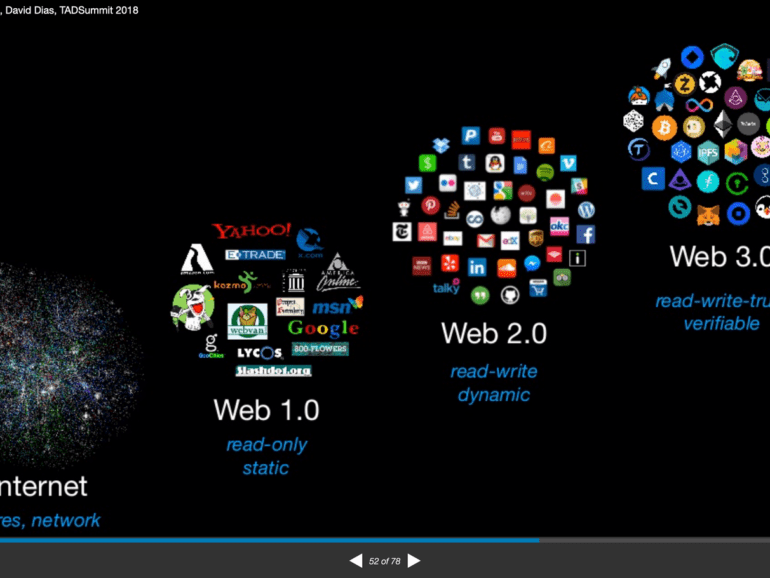
In this conversation, we talk with Michael Sena of uPort, 3Box Labs, and The Ceramic Network about web3.0, decentralized identity, and the various standards that he has been implicit in creating. Additionally, we explore the nuances around data ownership and identity, the journey from founding uPort to now 3Box and the Ceramic network and how the practical implementation of these ideas has changed as the decentralized web has changed from Web2.0 to Web3.0, and conclude on how the metaverse will be composed of decentralized identity and the protocols on which it travels.
exchanges / cap mktsidentity and privacymarketingMetaverse / xRNFTs and digital objectsSocial / Communityvisual art
·The structure of capital markets precedes the innovations that come from it. High frequency trading, passive ETF investing, SPACs, and crypto assets all telegraphed their value proposition before becoming large and meaningful in scale. We are now seeing a new market shape emerge, one that starts with community and builds up into financial instruments that are cultural and social. This analysis looks at the most recent developments in the overlap between decentralized social and cultural work and related financial features.
This week, we discuss the current state of the NFT markets, and our top 5 trends for NFTs beyond the initial hype:
Incumbent media NFTs and enterprise IP networks
Programmatic and generative art, and the blockchain medium
Digital Museums, DAOs, and the growth of the Metaverse
What it means to own the NFT: IPFS and multi chain support
Integration into DeFi and traditional portfolio management
Chinadigital lendingeCommerceMetaverse / xRneobanksmall businessSocial / Communitysuper appsupply chain / trade
·This week, we cover these ideas:
Klarna’s $640 million raise and its $45 billion valuation, and how its business model arbitrages the payments revenue pool to build a lending business
Pinduoduo’s growth path to a $150B marketcap, and the links between shopping, media, and financial mechanisms that help it compete with Alibaba
A comparison of approaches to growth and economics
Implications for crypto assets for capturing “the real economy”
Klarna is raising $640 million on a $45 billion private valuation, with over $1 billion in net operating income. The buy-now-pay-later company has over 90 million active customers and 250,000 merchants. It was founded in Sweden in 2005.
On the other side of the ocean, Chinese ecommerce company Pinduoduo is beating Alibaba with 820 million active buyers, generates over $3 billion in revenue per quarter, connects buyers to 12 million farmers, and has a market capitalization of $150 billion. It was founded in China in 2015.
In this conversation, we chat with Nicholas – an NFT developer and a contributor to Juicebox, which is an awesome DAO enablement software, as well as SharkDAO and PartyDAO. He is very active in the ecosystems, got a solidity podcast called Solidity Galaxy Brain, a collaborator with multiple NFT artists, but I could go on and on. Let me welcome Nicholas to the podcast.
More specifically, we touch on the philosophy behind programming and coding, what a decentralized autonomous organization (DAO) truly is and what it is comprised of, various successful examples of DAOs that Nicholas has been involved in, the concept of community and the value that DAOs serve in this respect, how DAOs leverage tools to achieve their purpose, and so so much more!
exchanges / cap mktsgaming & sportsgovernanceidentity and privacyMetaverse / xRNFTs and digital objectsregulation & complianceSocial / Community
·We discuss the top-down and bottoms-up approaches to innovation and project building. For the former, we reference Australia’s draconian surveillance laws, and the integration of US driver’s licenses into Apple’s wallet. For the latter, we dive into the Ethereum-based Loot project and its incredible derivatives, $500MM token, and $200MM of volume. Last, we conclude by highlighting the role of creators on the coming wave of Fintech.
No More Content